Fencing Built for Livestock and Land Use
Pipe fence installation in Big Sandy for ranches, farms, and rural properties needing durable containment systems
Heavy-duty pipe fencing serves properties where livestock pressure, equipment contact, and long-term outdoor exposure demand stronger materials than wire or wood. Welded steel pipe creates rigid fence panels that cattle, horses, and other livestock can't push through or damage during feeding and movement along fence lines. The continuous rail construction eliminates the maintenance cycle of replacing rotted wood boards or re-tensioning wire strands that stretch over time. JR Construction and Welding installs custom pipe fencing across Big Sandy and throughout East Texas, with layouts designed around pasture configuration, livestock type, and property terrain.
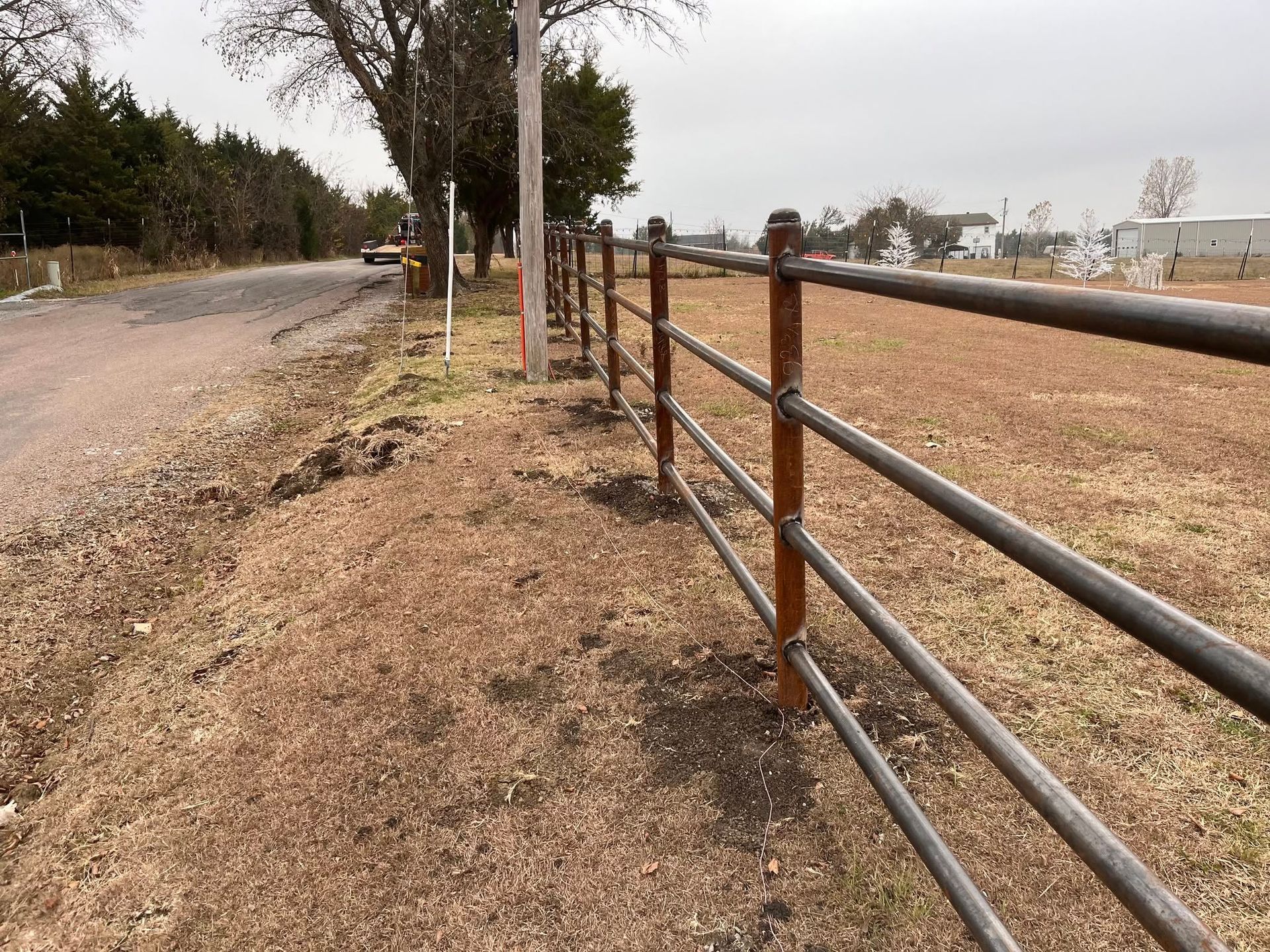
Installation involves setting vertical posts deep enough to resist lateral pressure from livestock, then welding horizontal pipe rails to create fence sections. The welded connections provide structural integrity that bolted or clamped systems can't match, particularly at corners and gate locations where force concentrates during animal movement.
Schedule an on-site assessment to review fence routing and receive a project estimate based on linear footage and terrain requirements.
What Changes After Pipe Fence Installation Completes
Pipe fencing creates a visible, rigid boundary that livestock recognize and respect after initial contact. The rails don't flex or give way when animals lean or scratch against them, which trains herds to maintain distance from the fence line. Gates operate smoothly on heavy-duty hinges designed for frequent use, and the welded frame construction prevents the racking and sagging that makes gates difficult to latch over time.
You'll notice the difference during pasture rotation and feeding—animals move along fence lines without creating gaps or damage points that require constant repair. The fence maintains its structural alignment through seasons, so posts stay plumb and rails remain level even after years of weather exposure and livestock contact. Maintenance drops to occasional inspection for coating damage or weld integrity rather than the regular board replacement or wire tightening that other fence types demand.
The fence height and rail spacing get customized based on what you're containing—cattle operations typically use wider spacing than horse properties, and smaller livestock may require additional mid-rails to prevent escape. Coating options include galvanizing or paint, depending on budget and expected service life. JR Construction and Welding welds all rail-to-post connections in the field, creating continuous fence sections rather than relying on brackets or clamps that loosen over time.
Answers to Frequent Service Questions
Property owners across rural areas surrounding Big Sandy often need specific information about pipe fence construction before moving forward with installation.
What pipe size and wall thickness work best for cattle fencing?
Two-inch or two-and-a-half-inch pipe with schedule 40 wall thickness provides adequate strength for most cattle operations without excessive material cost.
How deep do posts need to be set in the clay soil common throughout East Texas?
Terminal and corner posts typically require 36 to 42 inches of depth with concrete backfill to handle the leverage livestock apply at directional changes and gate locations.
What's the advantage of welded pipe fence over wooden board fencing for horse properties?
Pipe won't splinter when horses chew or rub against it, and the rigid rails prevent the flexing that allows animals to create gaps or push through damaged sections.
How long does pipe fencing last compared to other livestock containment options?
Properly coated and maintained pipe fencing routinely performs for decades, outlasting wood by a significant margin and requiring far less ongoing maintenance than wire systems.
What affects the total cost of a pipe fence installation project?
Linear footage, number of rails, post spacing, gate quantities, terrain difficulty, and coating requirements all contribute to the final investment needed.
What pipe size and wall thickness work best for cattle fencing?
Two-inch or two-and-a-half-inch pipe with schedule 40 wall thickness provides adequate strength for most cattle operations without excessive material cost.
JR Construction and Welding brings welding expertise directly to your property for custom pipe fence installation. Call (903) 714-9403 to discuss your land layout and livestock containment needs, and get a quote based on your specific fencing requirements.